


Introduction
REBECA EXPLORER is an innovative peer mentoring programme based on a group approach that supports early career researchers in developing their careers through mutual learning and shared commitment. Over a five month period, participants meet regularly to reflect on their values, explore career opportunities, define professional goals, and take concrete steps towards achieving them, while supporting one another with the guidance of a trained facilitator.
Piloted between May and July 2025 by FECYT in collaboration with the Spanish National Research Council (CSIC), and funded by the European project ERA TALENT (Grant Agreement No. 101103476), the programme has demonstrated a strong positive impact on participants. It has enhanced their confidence, career planning skills, and ability to navigate diverse professional paths, while fostering proactive behaviours such as networking, career exploration, and informed decision making.
Timeline of the programme
- 14th of March until 18th of April (EXTENDED)Internal registrationDescription
Only open for institutions piloting the programme (CSIC and mix Centers)
- 28th of AprilCommunication of selection
- 5th of MayKick off meeting
- 3rd week of May until 2nd week of JulyPeer group meetingsDescription
Peer groups will meet every 2 weeks for a total of 5 meetings
- 11th of JulyEnd of the programme
Who is this programme for?
This group peer mentoring programme is a perfect fit for early career resarchers (R1 and R2) those who need a little nudge to:
- Reflect on their current career path
- Explore other professional opportunities
- Take the first actions towards a professional decision
- Commit to personal professional development interests
- Make time to share career experiences and professional interests with others

Key elements of the programme

The participants will meet together with organizers and:
- Get introduce to the programmes and its objectives
- Get to know their peers’ group
- Team dynamics to build confidence among the group’s participants
- Learn about motivating and supporting each other
The programme contains two online mandatory workshops to advance participants competences on:
- Career planning on 14th of May
- Non-academic CV writing on 27th of June
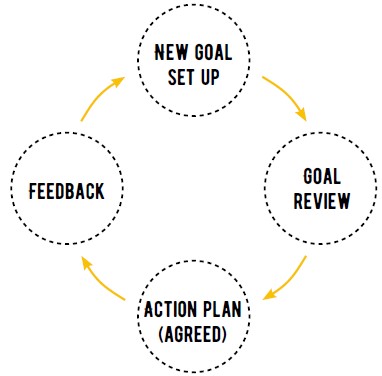
Each group will consist of 6 participants and will meet in person five times with their facilitator for 2-3 hours per session. During these meetings, participants will alternate between the roles of mentor and mentee, supporting each other in career decision-making and exploration. Each session will follow a four-step process:
Check the calender of the group session here:
REBECA EXPLORER_Calendar_Group sessions.pdf
Topics that can be discussed during group session could be:
- Personal empowerment & self-motivation
- Career exploration process
- Competences and transferable skills
- Soft skills
- Professional networking
- Non-academic CV
There will be an online closing event to bid farewell to the participants.
The organization will provide for the use of partcipantes the following resources:
- Handbook; REBECA Explorer Mentoring Handbook_2025.pdf
- Share point:
- Calendar
- Chat
- Library
Information about participants
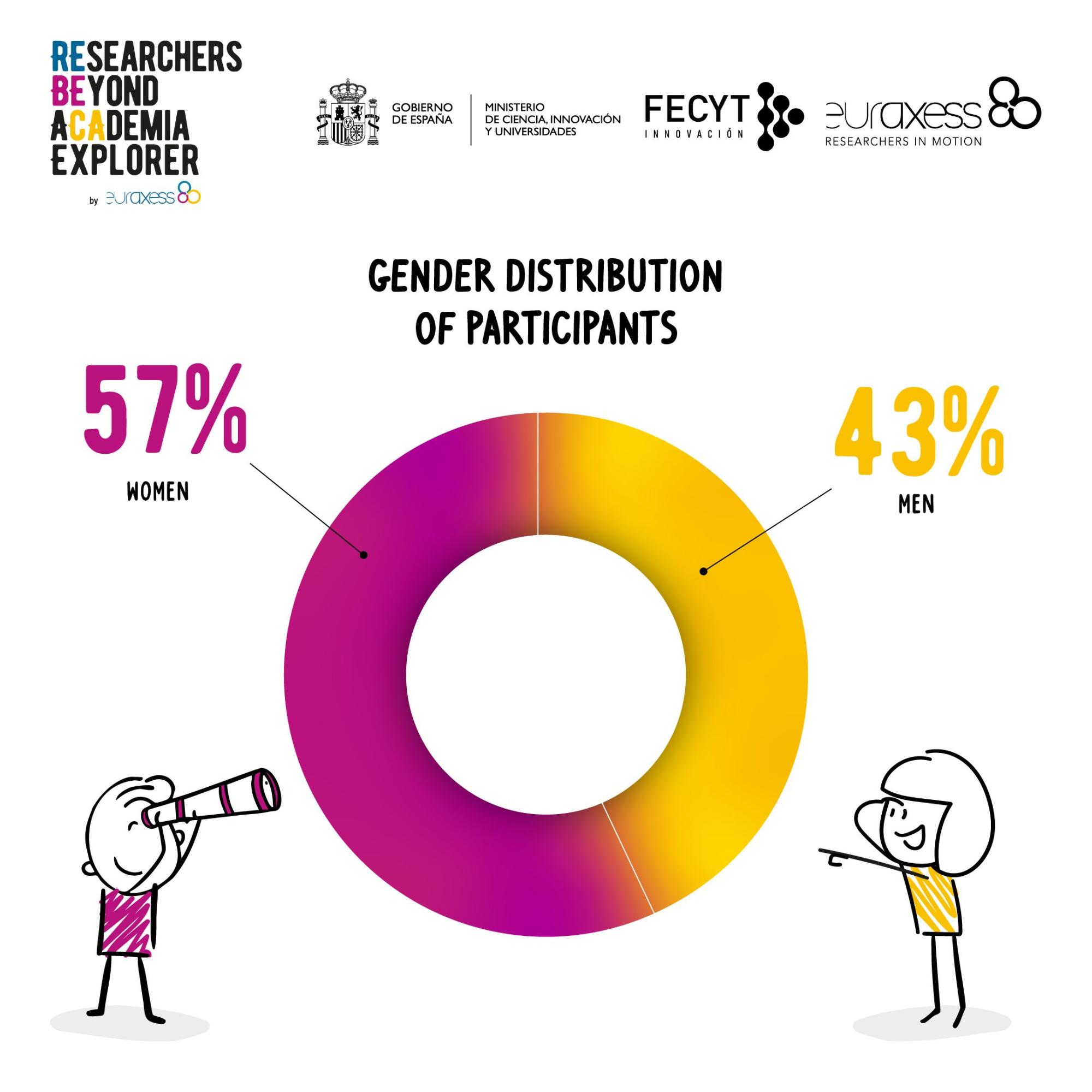
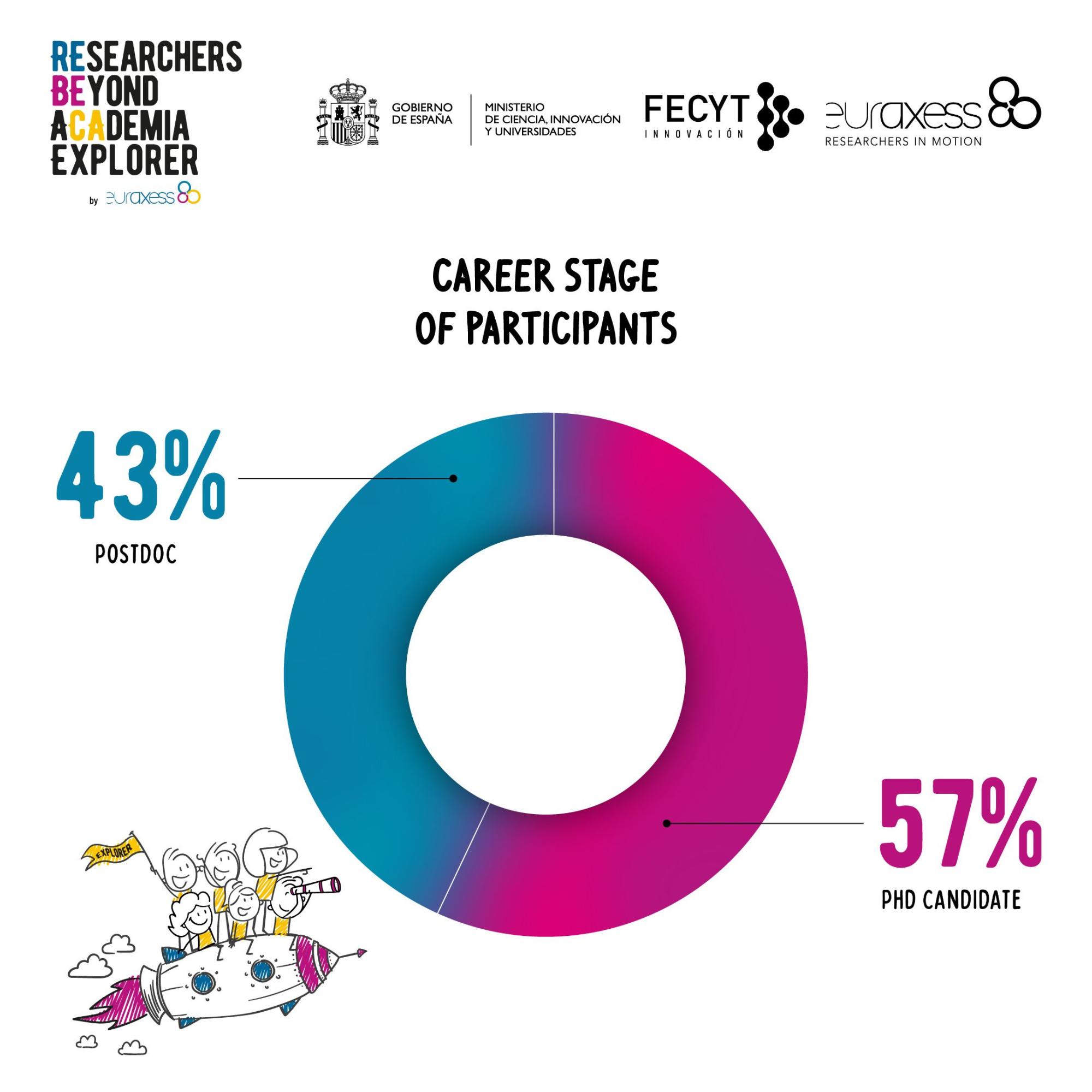
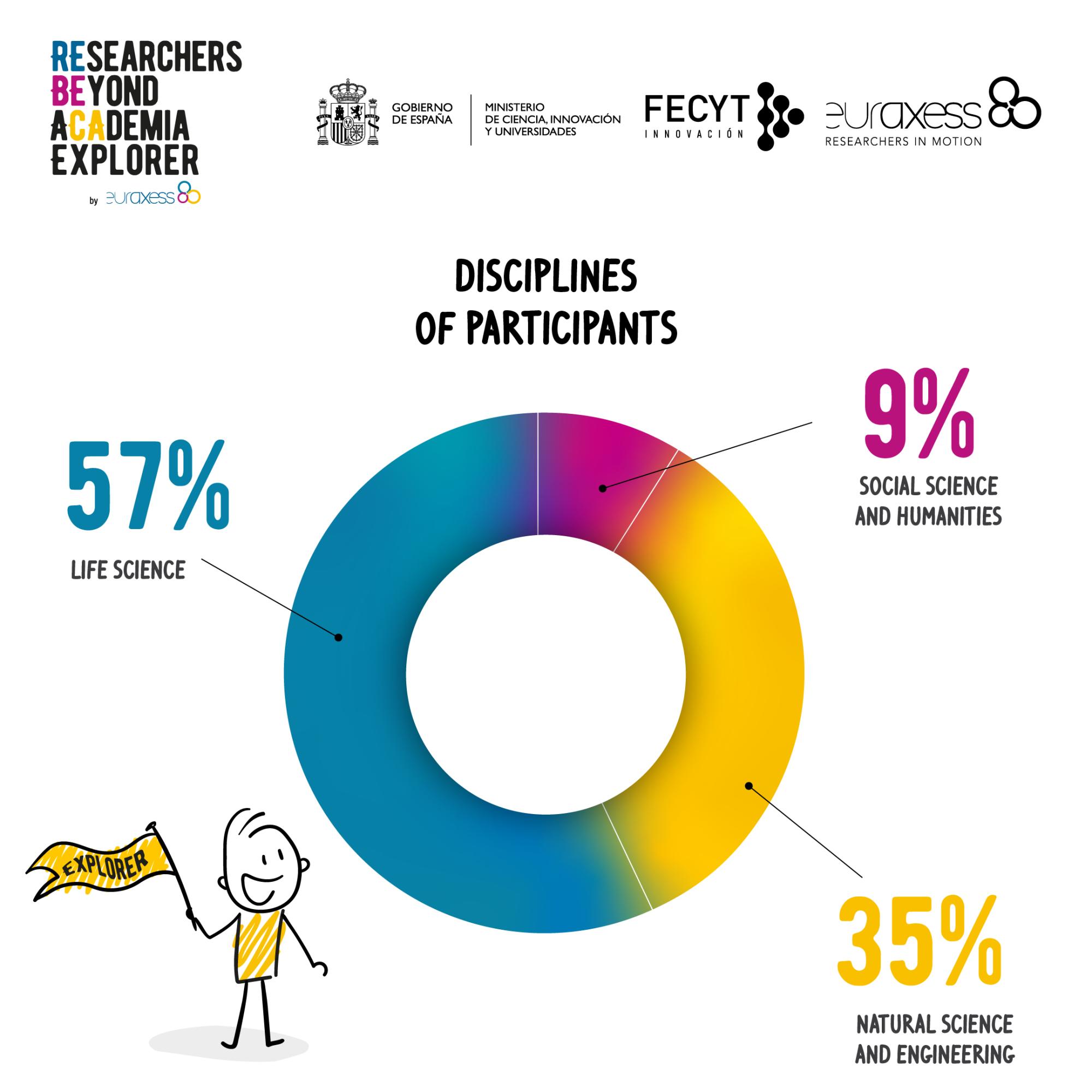
We selected 27 Early Careers Researchers (R1-R2), who have not defended the thesis later than 8 years, out of 56 applications received from researchers working at CSIC. The programme brought together 27 participants, with a slight female majority (57%). Most are in the doctoral stage (57%), while 43% are postdoctoral researchers. Participants mainly come from Life Sciences, followed by Natural Sciences and Engineering.
Four groups were formed with 5-6 researchers each.
Impact and Results
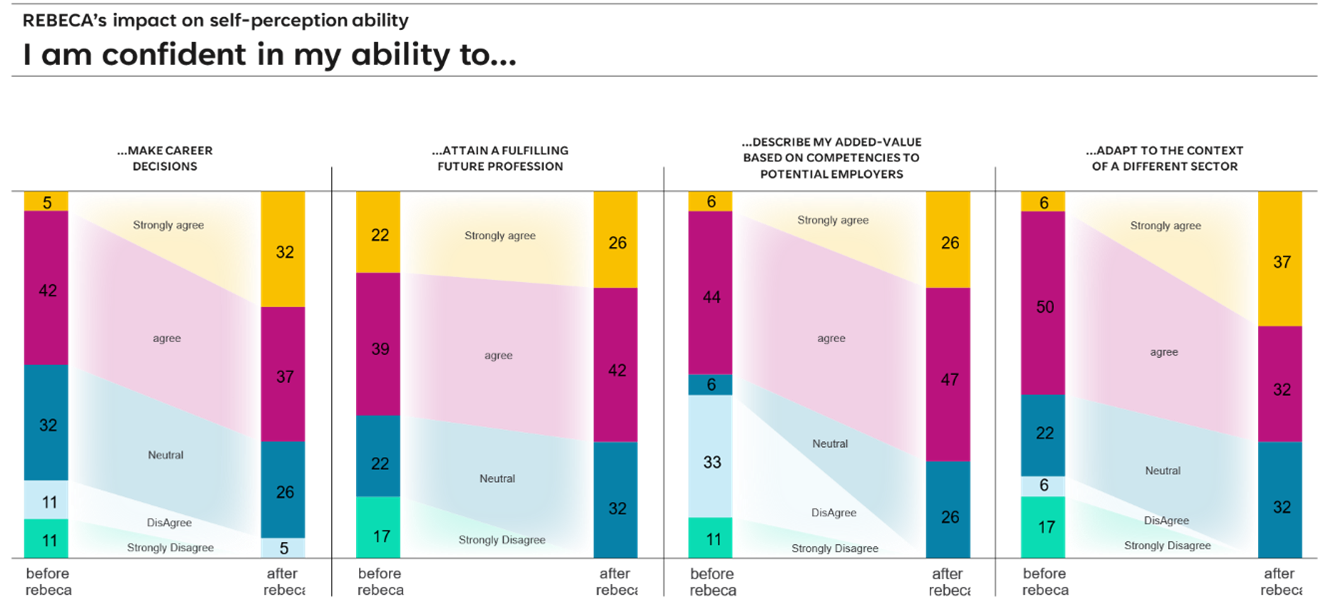
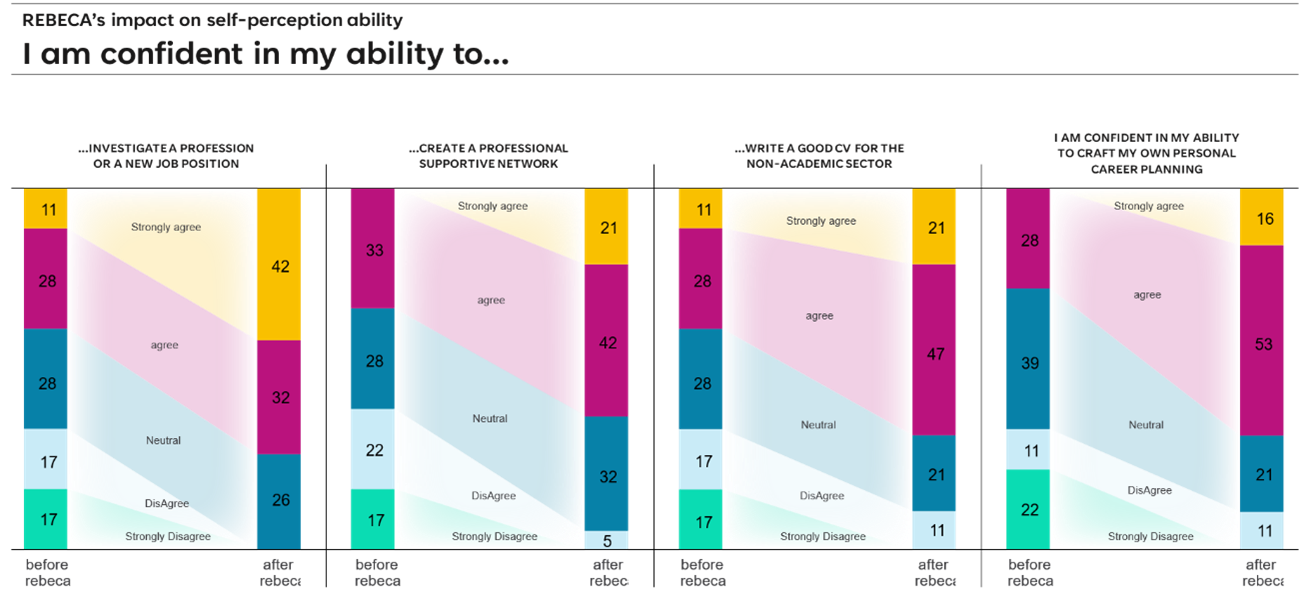
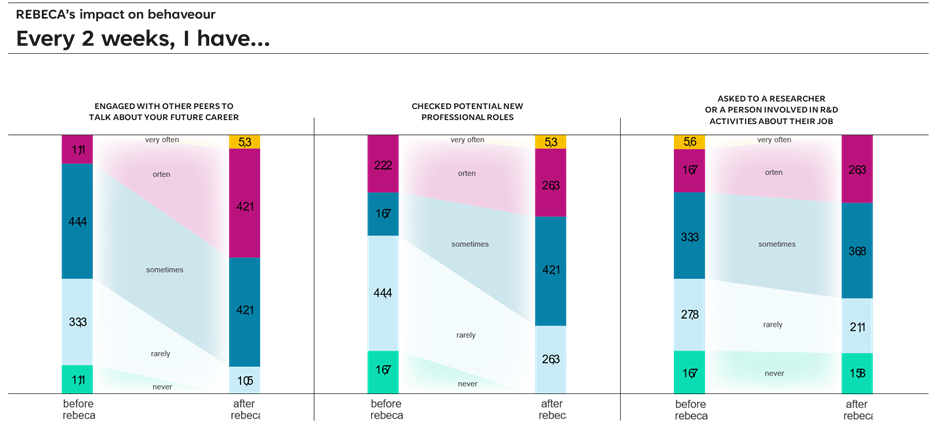
The programme has had a strong positive impact on participants’ confidence, career readiness, and practical career management skills. Participants report improved ability to make informed career decisions, identify and communicate their competencies to employers, and adapt to different professional sectors. Specific skill development includes career planning, CV writing for the non-academic sector, building professional networks, and researching new job opportunities. In addition, participants have strengthened key behaviours such as proactively exploring career options, engaging with peers, and seeking insights from professionals in diverse fields. Overall, the programme has enhanced both self-awareness and the ability to actively manage career progression.
The programme strengthened participants’ understanding of their career motivations, values, and professional identity. It supported them in reflecting on what defines a fulfilling career, clarifying their goals, and gaining a clearer sense of direction. Participants developed greater self‑awareness and confidence in shaping their future pathways, moving from uncertainty to more informed and intentional career decisions.
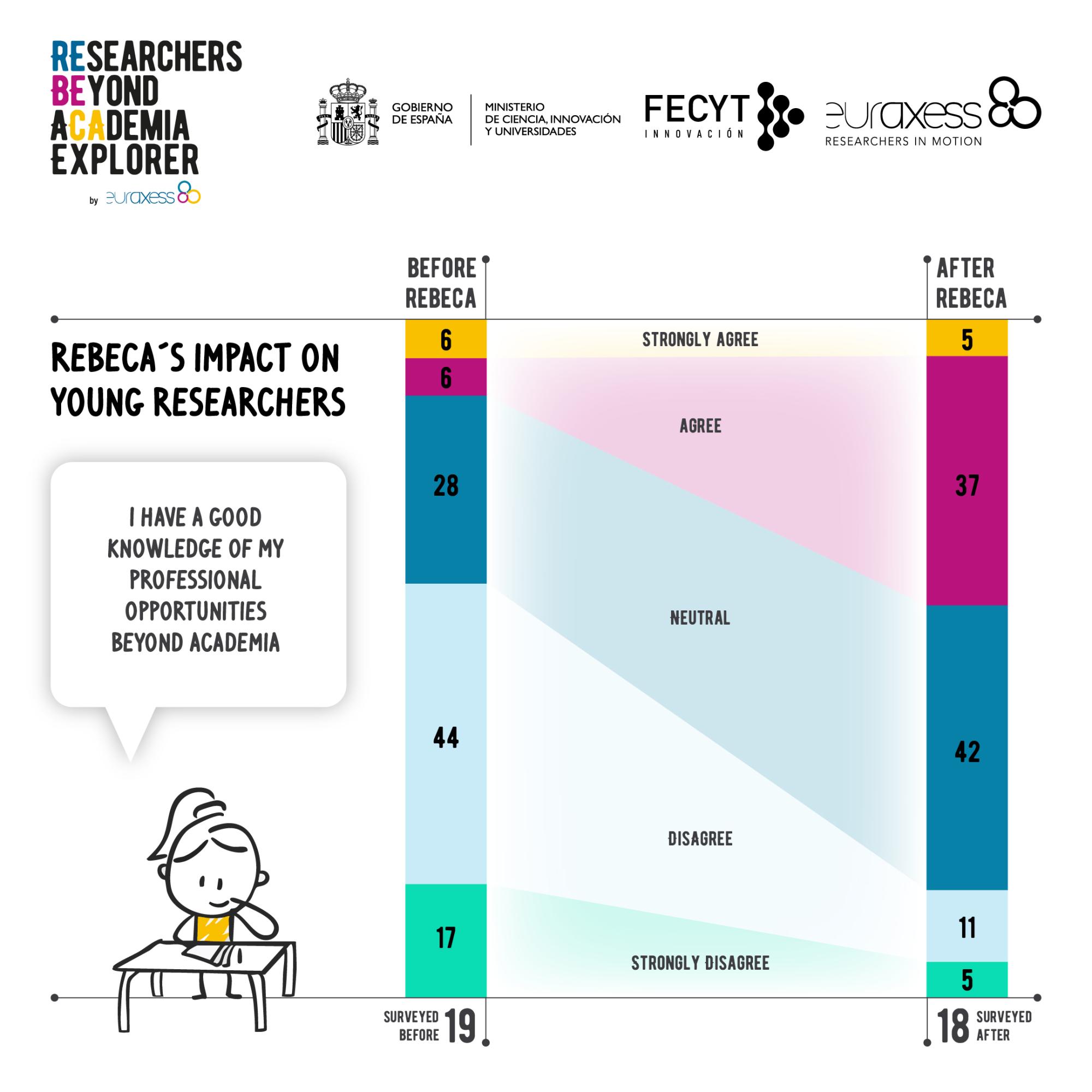
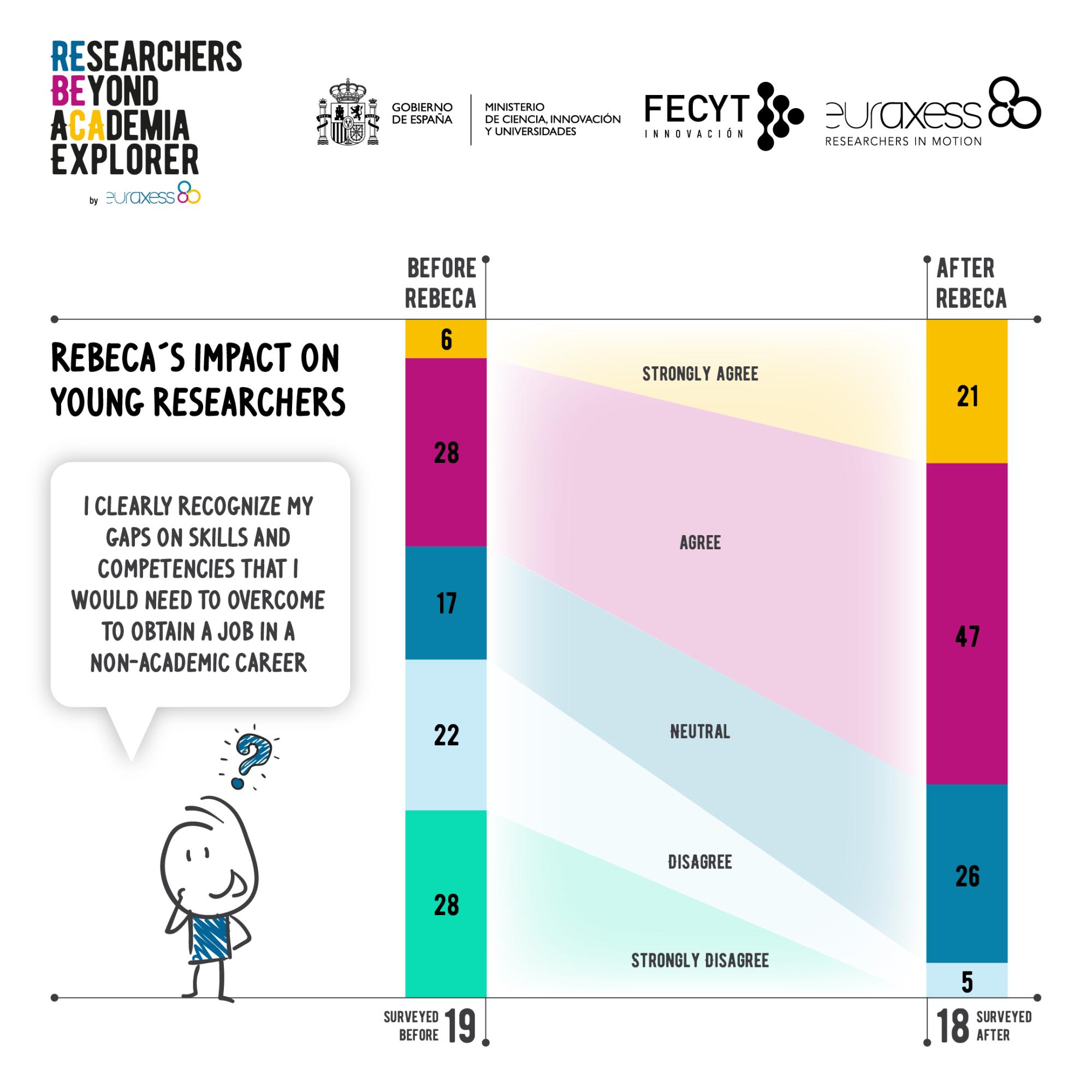
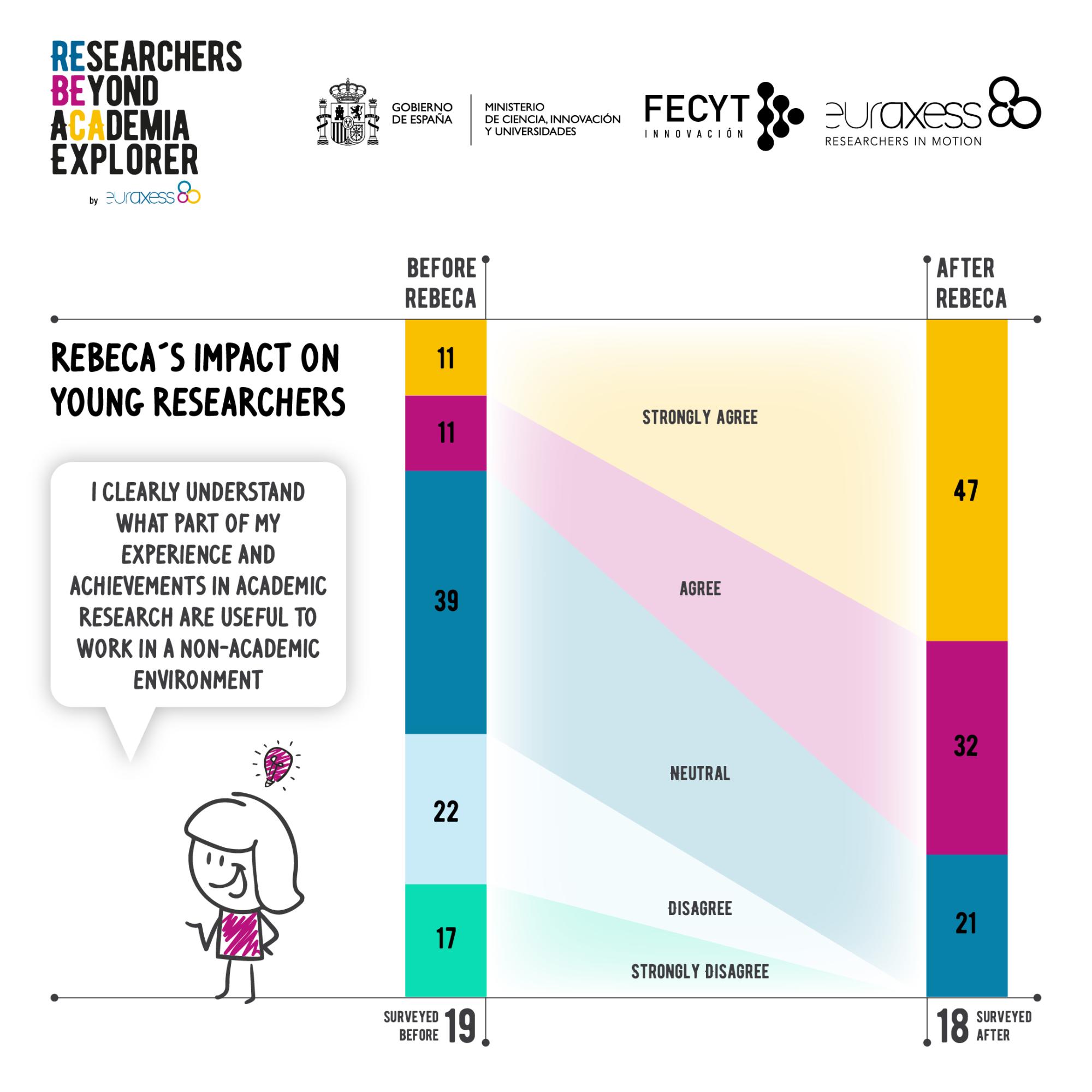
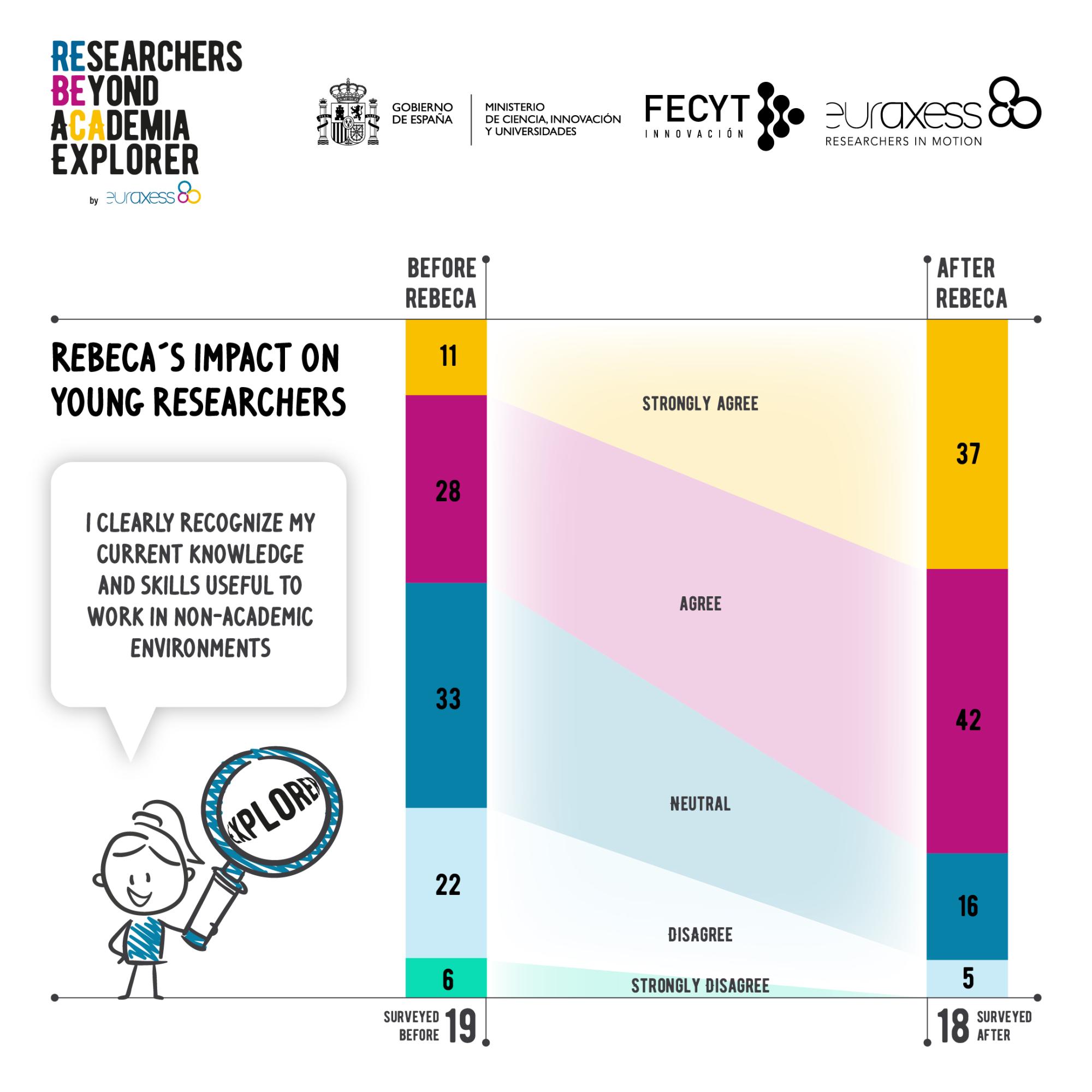
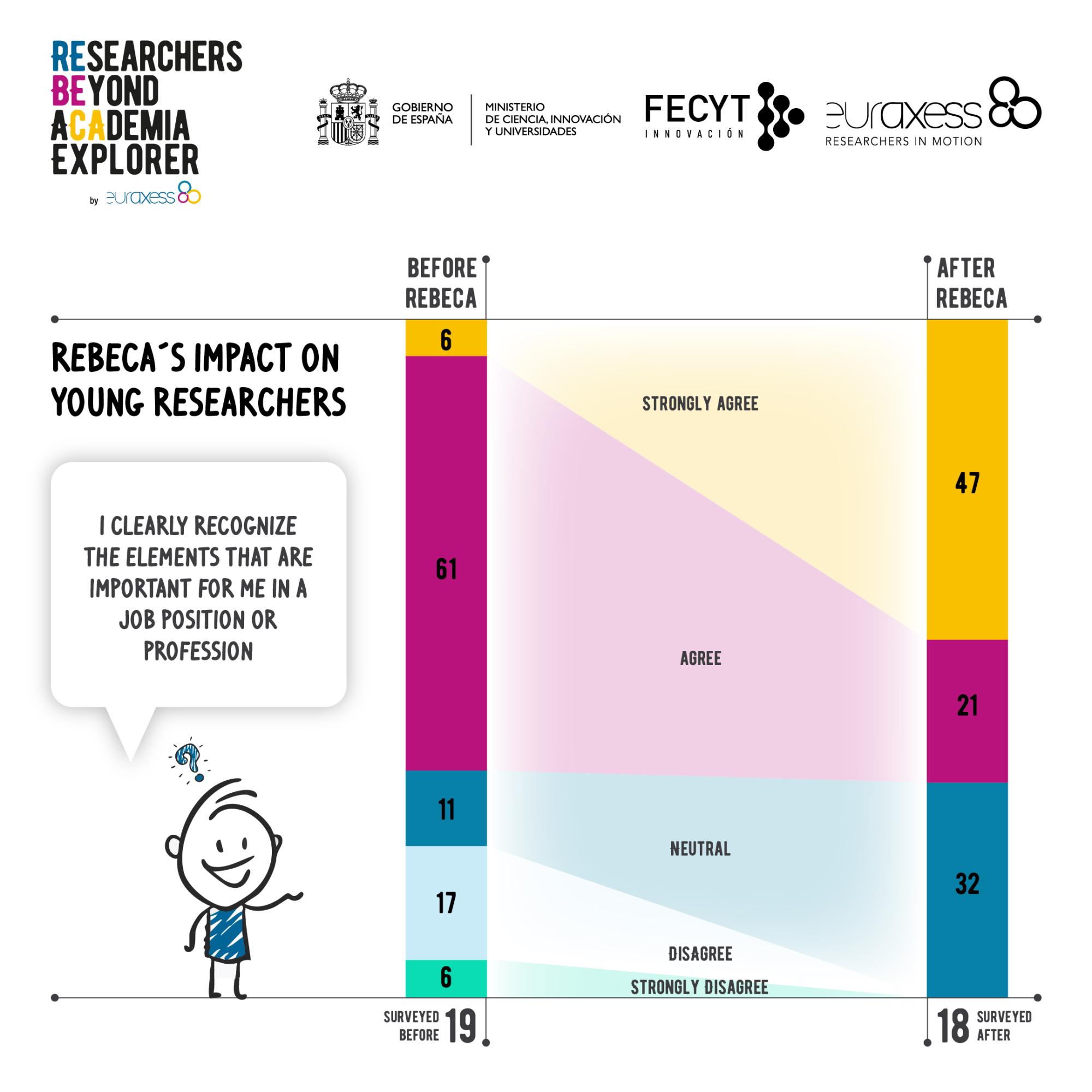
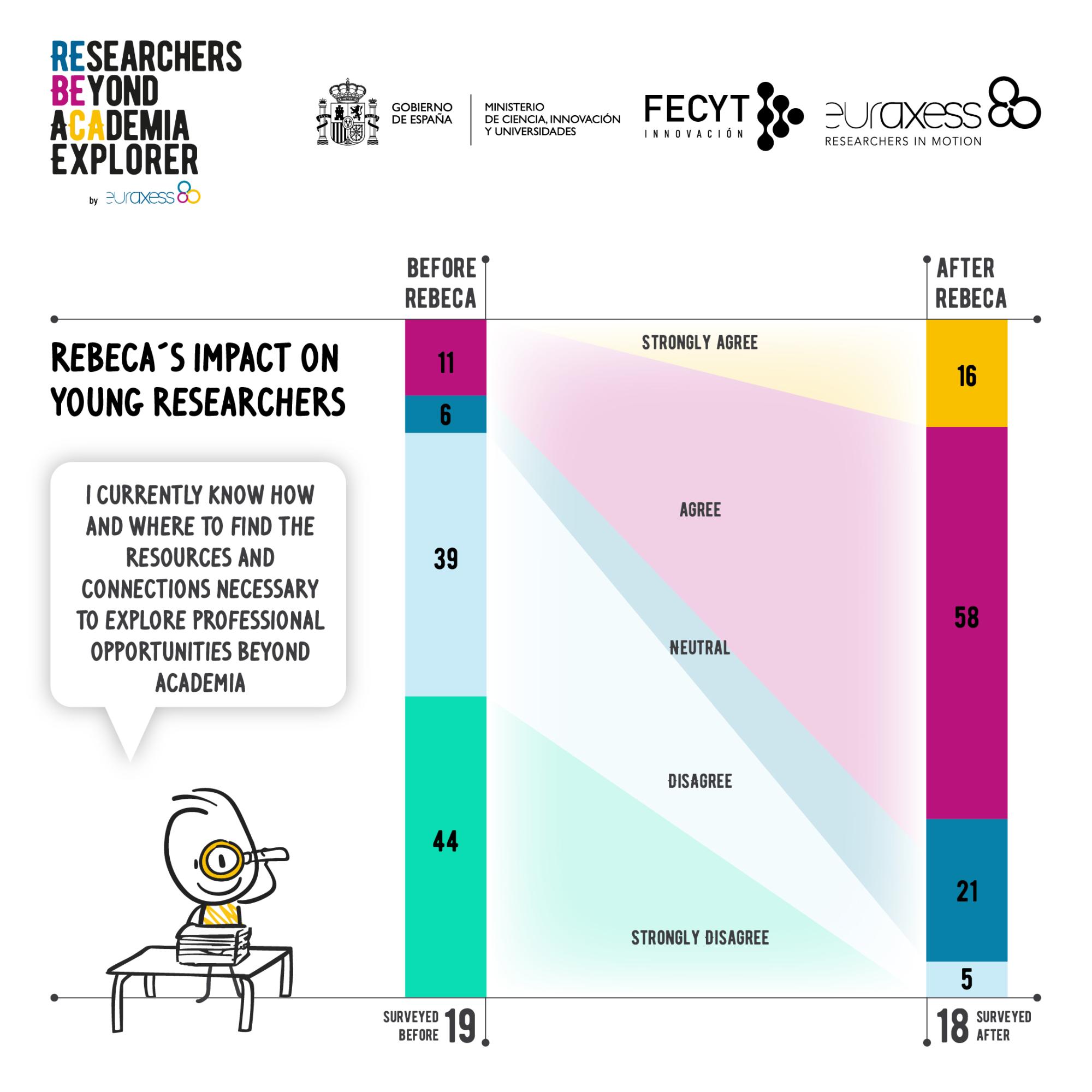
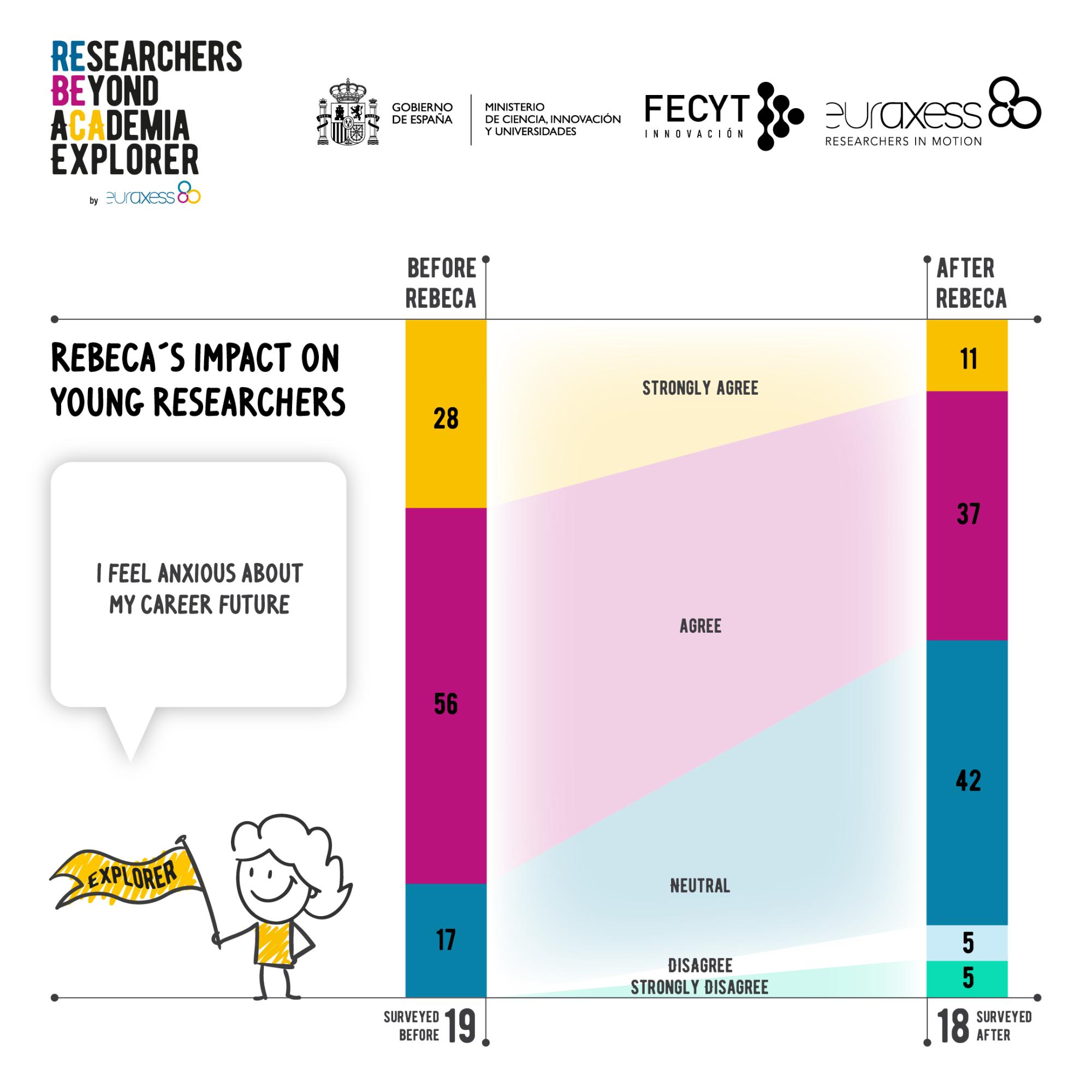
The programme significantly enhanced participants’ confidence in key career management skills, including career planning, exploring new professional opportunities, building networks, and preparing application materials for non‑academic roles. It also fostered more proactive behaviours, with participants regularly engaging with peers, investigating different career paths, and seeking insights from professionals. Overall, participants became more active, confident, and strategic in managing their careers.
Contact
If you have any question about this programme, please reach the REBECA Team at euraxess-spain@fecyt.es
If you are a Research Performing Organization or a University and want to implement a peer mentoring programme, here there is a toolkit ready to use: